If you’ve ever typed “boho floral wallpaper” into a search bar and found yourself forty-five minutes later scrolling through results that all look roughly the same — loose wildflowers, warm creams, maybe a terracotta bird — you already know the problem. The category is enormous, the quality range is wild, and a lot of what’s marketed as “bohemian” is just “beige with vines.” Peel-and-stick wallpaper (self-adhesive panels you apply directly to a painted wall and remove without damaging the surface, no paste required) has genuinely improved over the past three years: thicker vinyl backings, better color saturation, more forgiving repositionability. But the boho floral niche in particular is littered with thin, inkjet-printed sheets that look like a phone case blowup once they’re on your wall. This guide is for the buyer who’s past the “is peel-and-stick even worth it?” question and is now trying to make a smart call on a specific panel, a specific wall, and a budget between $50 and $200 for the whole project.
Why Boho Floral Is a High-Risk, High-Reward Pattern Category
Botanical and floral motifs have been the dominant wallpaper trend through 2024–2026, per Architectural Digest’s coverage of the wallpaper market in their annual trend roundup. But “boho floral” specifically sits in a tricky design space. The style borrows from two traditions that pull in opposite directions: the loose, organic line quality of hand-painted botanical illustration (think William Morris, or a good block-print textile) and the earthy, maximalist layering of bohemian interior styling. Done well, it feels collected and grounded. Done cheaply, it reads as generic.
The failure mode is almost always the same: a pattern with too-tight repeat (the repeat is the unit of the design that tiles across the wall — the smaller and more mechanical it looks, the more obviously “printed” the result) combined with thin, glossy vinyl that reflects light unevenly. Elle Decor’s coverage of botanical prints in 2025–2026 specifically called out the difference between patterns with an irregular, artist-drawn quality versus those with a “digitally symmetrical” feel — the latter being the thing that makes a wall look like a screensaver.
The decision you’re really making isn’t just which pattern you like. It’s which combination of:
- Pattern scale relative to your wall dimensions
- Print substrate (the material the design is printed on — thicker, matte-finish substrates read as more expensive)
- Repeat style (half-drop vs. straight-match vs. random/non-matching — more on this below)
- Room context (the other colors, textures, and furniture already present)
…will hold up at real scale, in real light, over the 12–24 months most renters keep peel-and-stick panels on a wall.
The Three Variables That Separate Premium-Looking Results from Cheap Ones
1. Substrate Thickness and Finish
The Spruce’s installation guide on peel-and-stick wallpaper notes that panels under 4 mil (mil = one thousandth of an inch, the standard thickness measurement for vinyl) are significantly more prone to tearing at seams and showing wall texture through the face. Most budget options clock in at 3–3.5 mil. Mid-tier and better options start at 5 mil and go up to 8 mil for heavier-duty panels.
Finish matters as much as thickness for boho florals specifically. Matte and linen-texture finishes absorb light in a way that mimics fabric or paper — which is exactly what a hand-painted or block-print-inspired design needs to feel right. High-gloss vinyl is fine for geometric or tile-style patterns; for organic botanicals, it’s the fastest way to make $120 worth of wallpaper look like a $14 shower curtain.
2. Pattern Repeat and Waste Calculation
A straight-match repeat lines up horizontally across every strip — simple to hang, minimal waste. A half-drop repeat (the most common structure in botanical and floral designs, where every other strip drops by half the pattern height) looks more natural and less mechanical on the wall, but it adds 15–25% to your material needs because of the offset waste at the top and bottom of each strip.
Here’s the math that surprises most buyers:
By the numbers — 10-foot accent wall, 8-foot ceiling, half-drop repeat:
- Wall square footage: ~80 sq ft
- Add 15% for half-drop waste: ~92 sq ft effective
- Add 10% for error/trimming buffer: ~101 sq ft
- At ~28 sq ft per standard double roll: you need 4 rolls minimum, not 3
Better Homes & Gardens’ accent wall planning guide recommends ordering one roll beyond your calculated need on any patterned paper — not because you’ll necessarily use it, but because dye lots (the specific color batch a roll is printed in — dye lots can vary slightly between production runs) can shift between orders, and a mismatch seam is permanent.
3. Colorway Honesty: What “Warm Neutral” Looks Like in Real Light
Apartment Therapy’s honest review of peel-and-stick wallpaper — one of the more cited pieces in the category — specifically flags color rendering as the most common disappointment. Screens display sRGB color profiles; most home walls are lit by warm white or soft white bulbs (2700–3000K color temperature). A cream that looks crisp and slightly warm on your monitor can read as yellow-green in late-afternoon light or dingy under a warm bulb.
The only reliable fix is samples. Order a minimum 12×12 inch sample — ideally 12×24 if the brand offers it — and tape it to the actual wall at the actual height. Live with it for two days across different times of day before you order full rolls.
How to Actually Hang It So the Seams Don’t Show
Seam visibility is the number-one complaint in aggregated reviews of peel-and-stick wallpaper across major retail platforms. The cause is almost never poor adhesion — it’s almost always one of three prep failures:
Wall prep is non-negotiable. Peel-and-stick requires a clean, dry, fully cured painted surface. “Fully cured” means the paint was applied at least 30 days ago — not 30 hours, not 30 days since you moved in. Fresh latex paint outgasses for weeks, and that outgassing is exactly what lifts adhesive at seams. The Spruce’s installation walkthrough specifies wiping walls with a slightly damp cloth (no cleaning products — residue interferes with adhesion) and allowing 24 hours to dry before application.
Plumb your first strip. Use a level and a light pencil line. Every subsequent strip aligns to that first one. Most walls that “look straight” are off by a quarter to a half inch over eight feet — enough to make a botanical repeat drift visibly by the fourth strip.
Overlap, then trim. Rather than butting strips edge-to-edge (which leaves a visible gap if either strip moves even slightly), overlap the edges by a quarter inch and use a straight edge and sharp utility knife to cut through both layers simultaneously. Peel away the excess from both strips. The resulting seam is nearly invisible because both edges were cut against each other, not against a factory edge.
For the actual installation, a mid-tier option in this category handles the overlap-and-trim method better than budget-tier because the thicker substrate doesn’t shred under the knife.
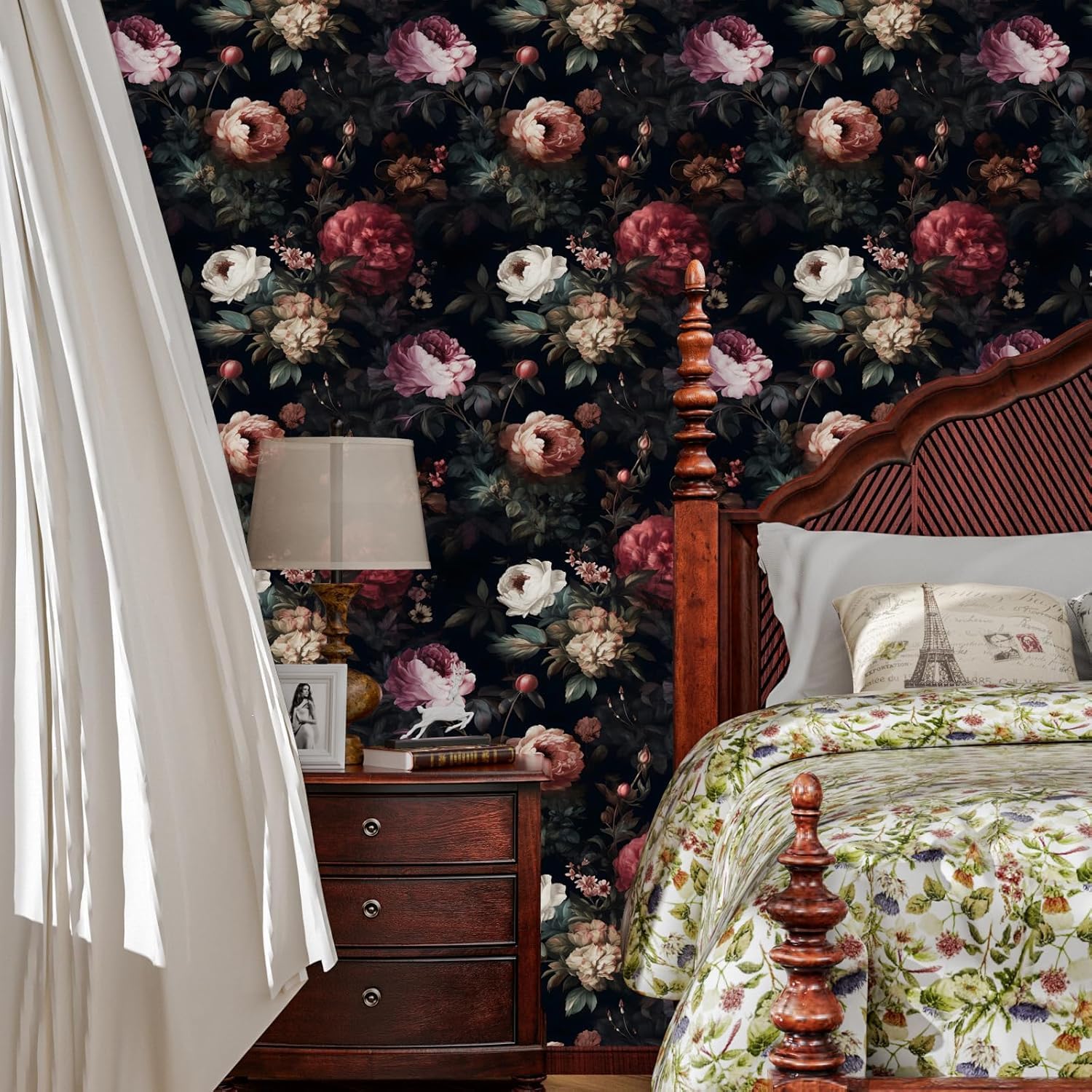
Dark
$36.98
In stock on Amazon
Check price on AmazonIf you’re covering a smaller surface — a fireplace surround, a single bedroom wall in a studio apartment, or a renter-safe headboard accent — a budget option is genuinely fine for limited runs where you have fewer seams to manage.
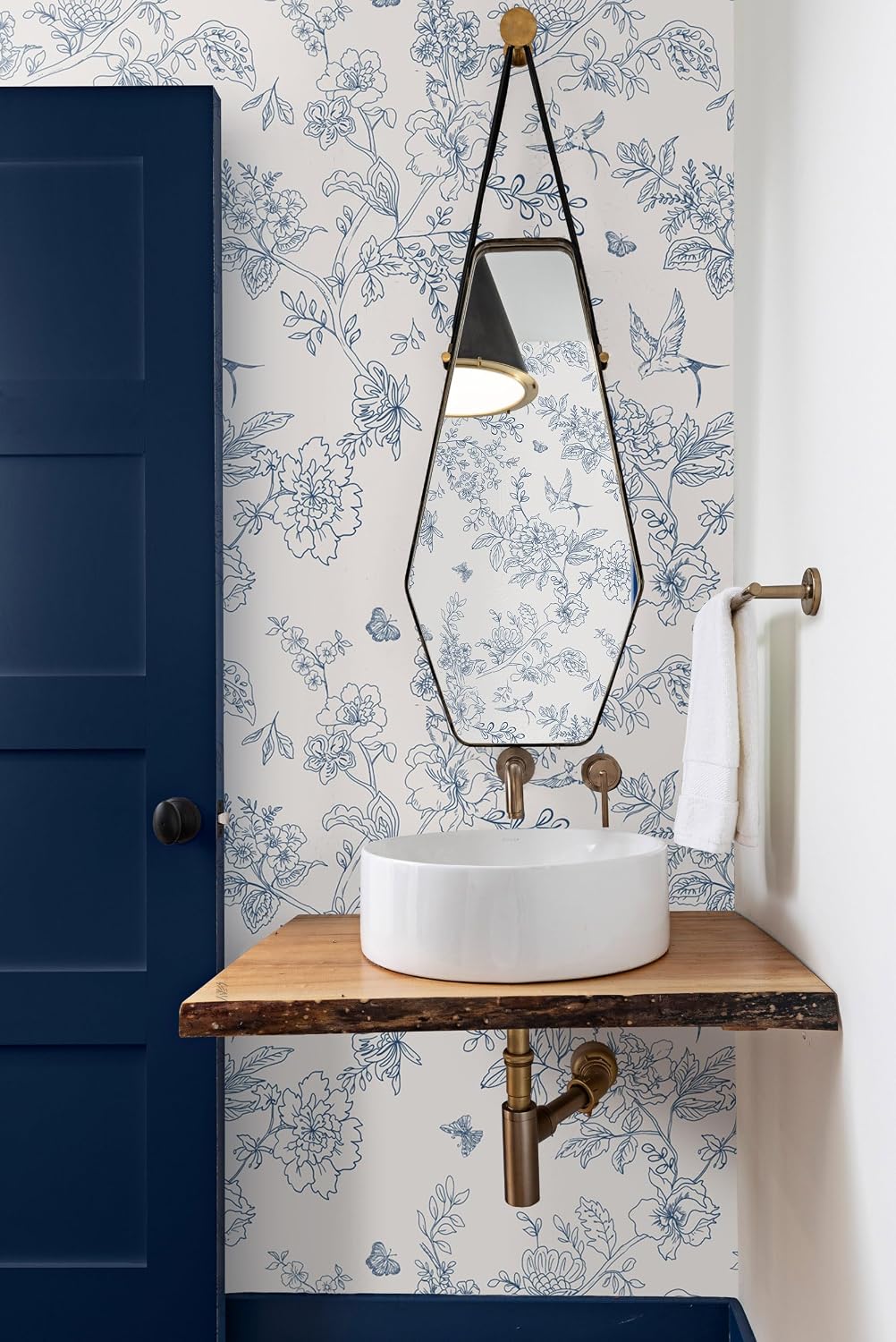
Froluya
$12.99
In stock on Amazon
Check price on AmazonPattern Sourcing: Where the Good Boho Florals Actually Live
The honest answer is that the best boho floral peel-and-stick options are not all in one place. Here’s the breakdown by where buyers in this category tend to land:
Amazon has the widest selection and the fastest delivery, which matters if you’re on a renovation timeline. The quality range is enormous — read the one-star reviews for any specific pattern and look for whether complaints cluster around color inaccuracy, thin vinyl, or seam failure. Consistent patterns in the negative reviews tell you more than the star average does.
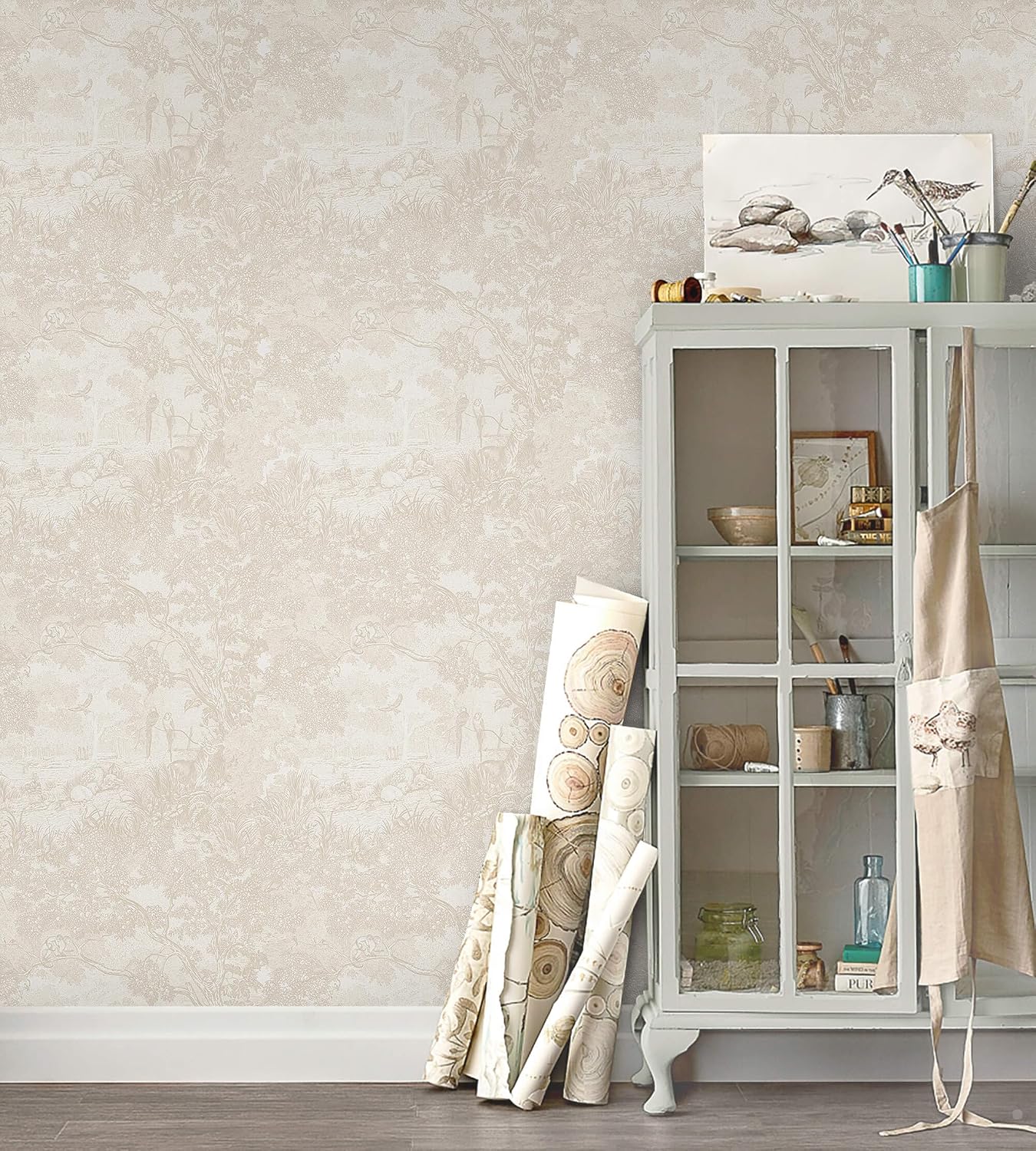
Heroad
$43.99
In stock on Amazon
Check price on AmazonWayfair tends to carry more mid-tier and design-house-branded options than Amazon in this category. Their filtering by roll width (standard 20.5 inches vs. wider 24-inch panels, which reduce seam count) is more granular than Amazon’s. If seam count is your primary concern on a large wall, it’s worth checking Wayfair’s selection specifically for 24-inch-wide options.
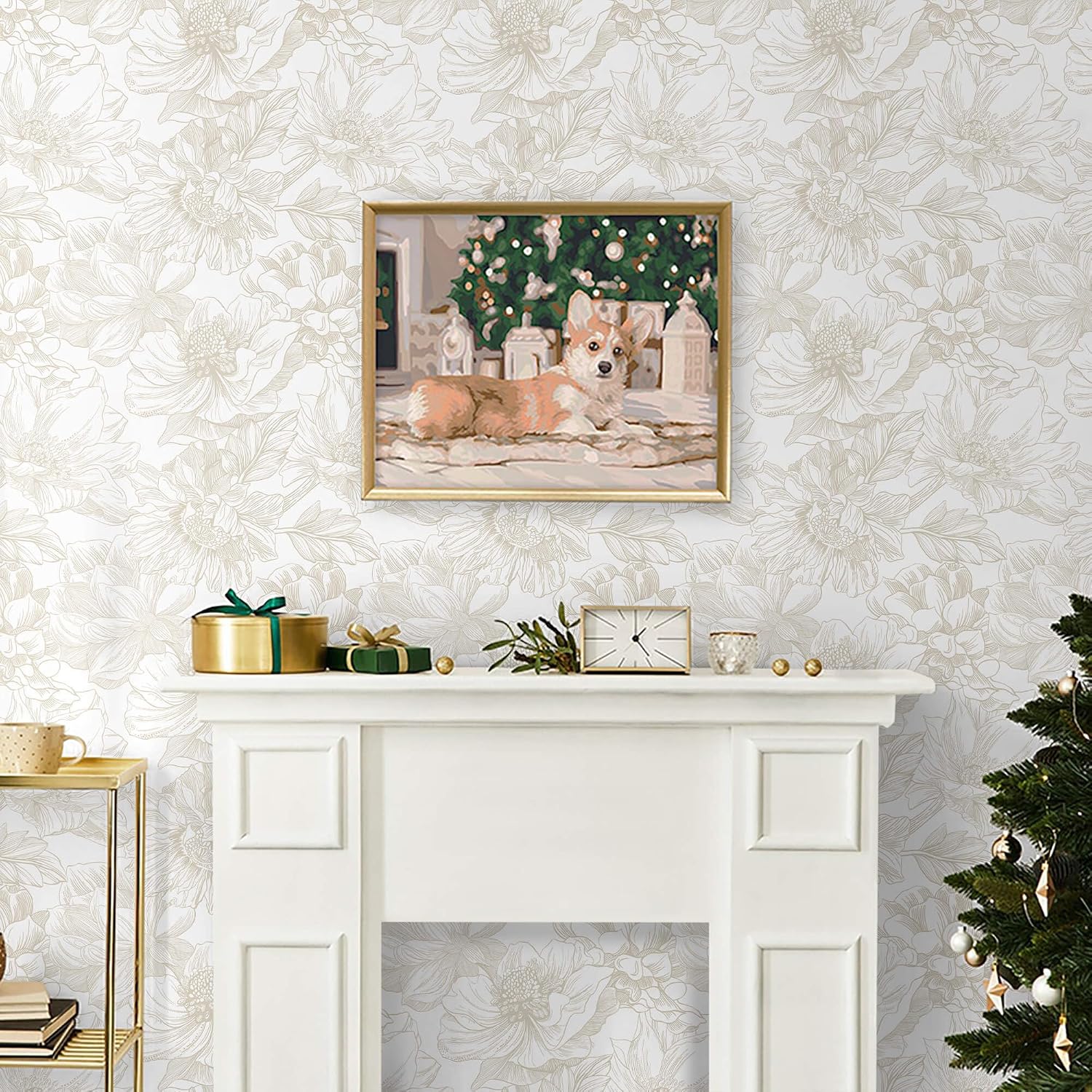
Ismoon
$42.99
In stock on Amazon
Check price on AmazonHome Depot carries a narrower selection but has the advantage of in-store sample availability at select locations — you can see the actual substrate texture before ordering. For buyers who’ve been burned by color inaccuracy before, this is underrated.
Dark
$36.98
In stock on Amazon
Check price on AmazonThe Decision Framework: Which Situation Calls for What
Here’s the honest if/then:
If your wall is under 60 square feet and you’re in a rental: Go budget-tier, accept some seam visibility, prioritize matte finish over thickness. The material savings are real and the stakes of a removal mistake are low enough that over-engineering is waste.
If your wall is 60–120 square feet and you’re a homeowner or long-term renter: Mid-tier substrate (5+ mil, matte finish) is where the quality-per-dollar ratio is strongest. The difference between a $0.80/sq ft panel and a $1.40/sq ft panel is the difference between “that’s peel-and-stick” and “wait, is that wallpaper?” Spend the extra $30–50 on a larger wall. It compounds.
Heroad
$43.99
In stock on Amazon
Check price on AmazonIf you’re doing a high-visibility space — primary bedroom, living room, a space that appears in listing photos — and the wall is over 120 square feet: consider whether peel-and-stick is actually the right tool. A traditional paste-hung mural or printed paper from a design-house brand will hold up better, photograph better, and not require the overlap-trim seam management. Peel-and-stick earns its keep in the renter-safe, reversible use case. If reversibility isn’t a constraint, it’s not automatically the best option.
If color matching is critical (you’re tying the wallpaper to existing textiles, upholstery, or cabinetry): don’t skip the sample step. The return cost on three wrong rolls of wallpaper is higher than the sample cost at any brand that offers it. Apartment Therapy’s peel-and-stick review makes this point explicitly: “the gap between screen color and in-room color is the most expensive mistake in this category.”
The boho floral category specifically rewards buyers who slow down at the sample stage and speed up at the installation stage — not the reverse. Order samples from two or three patterns that feel right on screen, live with them on your wall for a weekend, then commit. That one habit will do more for your outcome than any other single decision in this guide.
Dark
$36.98
In stock on Amazon
Check price on Amazon