If you’ve ever stared at a living room that felt perfectly fine but completely forgettable — good bones, decent furniture, nothing obviously wrong — dark and moody wallpaper is often the answer designers reach for first. “Dark and moody” just means wallpaper in deep, saturated tones: forest greens, inky navies, charcoal grays, rich burgundies, or near-black botanicals. The worry most people have is that going dark will shrink the room and swallow the light. That worry is real, but it’s also manageable with the right choices. This guide walks you through exactly how to evaluate dark wallpaper for a living room — which wall to put it on, which patterns work at scale, how to keep the space feeling open, and what the full project is actually going to cost you before you commit.
By the end, you’ll have a clear decision framework: not just “dark wallpaper is beautiful” (it is), but specifically your room, your light conditions, and your budget — with tradeoffs named plainly.
Why Dark Wallpaper Works (and When It Doesn’t)
The counterintuitive thing about deep-toned wallpaper, which Architectural Digest’s piece on dark walls in small rooms makes clearly, is that darkness applied consistently to a surface actually dissolves the perception of that surface. When a wall is a flat, unbroken field of deep color or pattern, your eye stops registering it as a boundary and starts reading the room as more enveloping — cinematic rather than cramped. The problem is inconsistent darkness: one dark wall against three bright white walls reads as a shrinking box rather than an intentional design moment.
That’s the first real decision point. Dark wallpaper works best in one of two configurations:
1. True accent wall, heavily supported. One wall goes dark — almost always the wall your sofa faces, or the fireplace wall — but the furnishings, trim, and textiles in front of it are warm and layered enough to bridge the contrast. Light-colored or metallic furniture legs, a light-toned rug, sconces that throw warm light onto the wallpapered surface. Without that support layer, a dark accent wall just looks like a paint mistake.
2. Full-room immersion. All four walls, possibly the ceiling. This sounds aggressive, but Apartment Therapy’s roundup of dark accent walls notes consistently that designers who go all-in on a dark room almost always end up happier with the result than those who hedge with one wall. When every surface is deep, the furniture and lighting define the space — not the walls.
The situations where dark wallpaper genuinely doesn’t work: rooms with a single north-facing window and no supplemental lighting plan, rooms with low (under 8-foot) ceilings where you’re also going full-room immersion, and rooms where the existing trim is a cool bright white with no plans to repaint. Cool white trim around a warm inky-green botanical paper creates a clash that no amount of stylish furniture resolves.
Choosing the Right Pattern at the Right Scale
This is where intermediate buyers often make an expensive mistake. Dark wallpaper isn’t just about color — the pattern scale relative to your wall height determines whether the room reads as sophisticated or chaotic.
By the numbers:
| Wall height | Pattern repeat to look for | Why |
|---|---|---|
| 8 ft | 12–18 inch repeat | Fits 2–3 full repeats without awkward cuts at ceiling |
| 9–10 ft | 18–27 inch repeat | Fills the wall with intentional rhythm |
| 11+ ft | 27–36 inch repeat, or mural panel | Scale earns the height; small repeats look busy |
A botanical mural — one continuous illustrated scene, sold in panels rather than repeating rolls — is the strongest choice for rooms with walls 9 feet or taller. The lack of a repeat means zero pattern-matching waste, and the large-scale imagery reads as art rather than wallcovering. Elle Decor’s 2025 feature on moody interiors specifically calls out oversized botanical and abstract mural wallpaper as the dominant trend among designers working in dark palettes, largely because the panel format gives you controlled drama without the visual noise of a tight repeat in a dark colorway.
For rooms under 9 feet, a medium-repeat damask, textured geometric, or loose painterly botanical will serve better than a true mural. The goal is visual density without claustrophobia.
Pattern type tradeoffs at a glance:
- Mural panels (bespoke or semi-custom): highest visual impact, zero waste from repeat matching, but highest cost ($200–$800+ per panel depending on source) and almost no margin for error on measurement.
- Repeat botanical/damask on standard rolls: easier to calculate yardage, more forgiving on installation, mid-range cost ($80–$180 per roll for quality printed; $300+ for hand-painted), but pattern matching adds 15–20% waste to your roll count.
- Textured solid or tone-on-tone: lowest risk, works in any room proportion, easiest to hang — but the “moody” effect depends entirely on getting the texture and sheen right. Matte finishes recede; slight sheens (silk, grasscloth weaves) add light play that keeps the room from feeling dead.
The Full True Cost: What Dark Wallpaper Projects Actually Run
Let’s run the math on a typical living room accent wall — 12 feet wide, 9 feet tall, one doorway.
Usable wall area: approximately 96 sq ft (after subtracting door)
Standard roll coverage: most wallpaper rolls cover 28–30 sq ft
Rolls needed (base): ~3.5 rolls → order 4
Pattern repeat waste (18-inch repeat): adds roughly 1 additional roll → order 5 rolls
At a mid-range printed wallpaper price of $120/roll, that’s $600 in wallpaper alone. Add:
- Primer (wallpaper-specific): $35–$55 for a gallon (The Spruce’s adhesive and prep guide notes that skipping primer on drywall is the single most common cause of dark wallpaper lifting at seams)
- Paste or pre-mixed adhesive: $25–$45
- Seam roller, smoothing brush, snap line: $30–$50 if you don’t own them
- Professional install (if not DIY): $200–$400 for a single accent wall in most US markets as of mid-2026
Realistic all-in range for a single accent wall: $700–$1,100 DIY; $900–$1,500 professionally installed.
For a full-room treatment (four walls, same 12×12 room, 9-foot ceiling): expect 18–22 rolls at mid-tier pricing, landing between $2,200 and $3,500 all-in with professional installation.
This is not to discourage you — dark wallpaper at this price point transforms a room in a way that paint or printed art simply doesn’t. But knowing the real number before you fall in love with a specific paper is the whole game.
Products Worth Considering at Each Budget
For the Prep Work (Non-Negotiable Before Any Dark Paper)
Dark wallpaper is brutally honest about bad prep. Every ridge, every seam in old drywall, every bubble shows through a deep ground color. A good wallpaper primer seals the drywall and gives the paste something to grip — and this is one place where skimping genuinely shows up at installation.
For a single accent wall on a budget, a standard primer-sealer does the job without overspending.
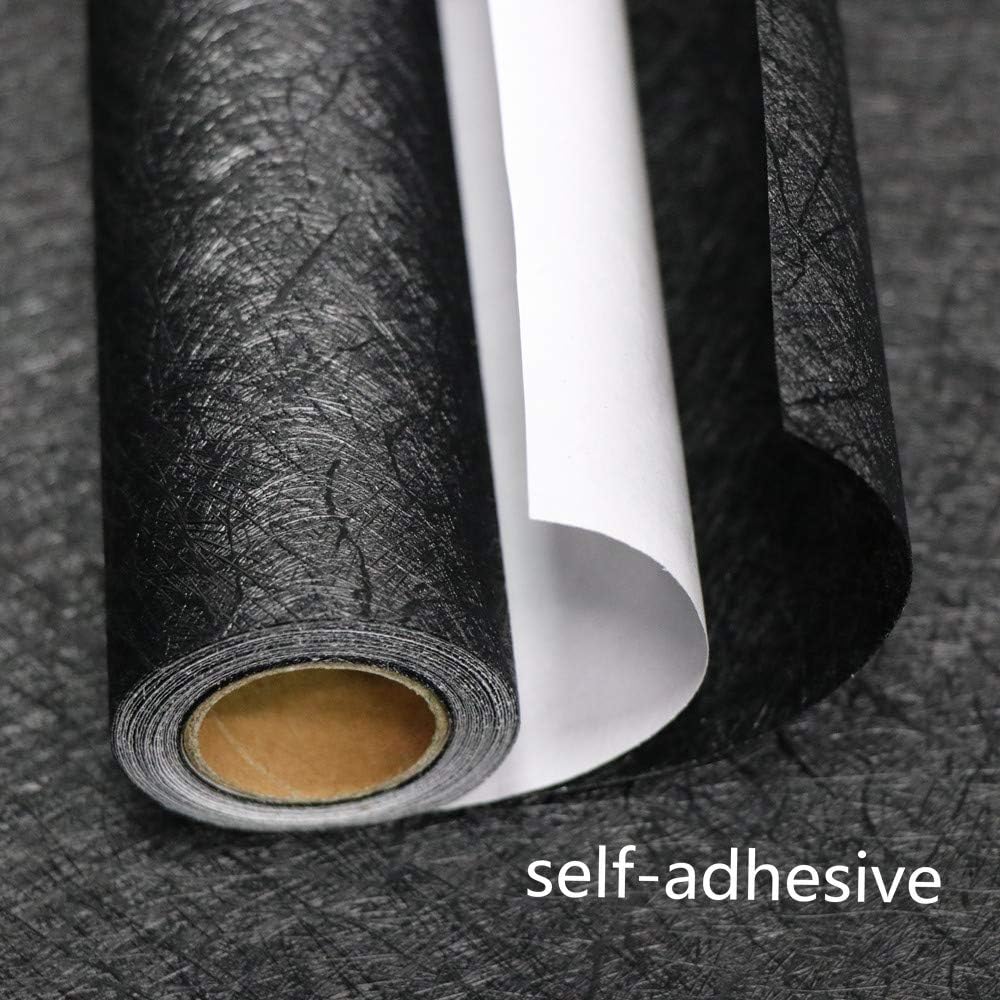
15.7"
$5.99
In stock on Amazon
Check price on AmazonFor larger or full-room projects, a dedicated wallpaper sizing compound (a traditional coating that controls how much moisture the wall absorbs from the paste) is worth the upgrade — it slows down the working time and lets you adjust panels more easily.
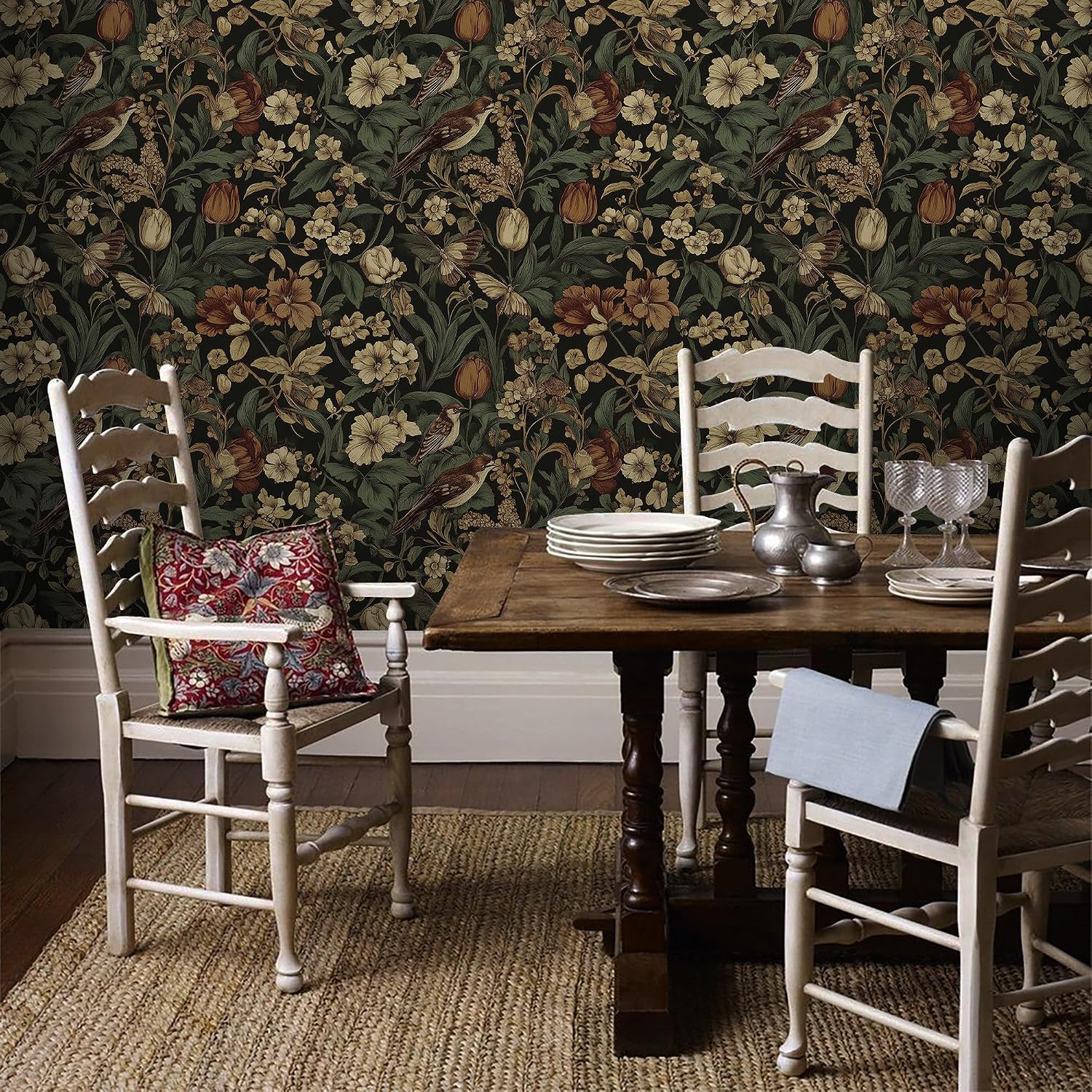
Erfoni
$11.69
In stock on Amazon
Check price on AmazonFor Pattern-Heavy Botanical or Mural Paper
The paste you use matters more than most guides admit. Heavy papers — especially thicker mural-grade stock — need a heavier-bodied paste that won’t let panels slide before they tack. Better Homes and Gardens’ installation guide recommends a clear heavy-duty wallpaper adhesive over standard paste for any paper over 100 GSM (grams per square meter, a measure of paper weight and thickness).
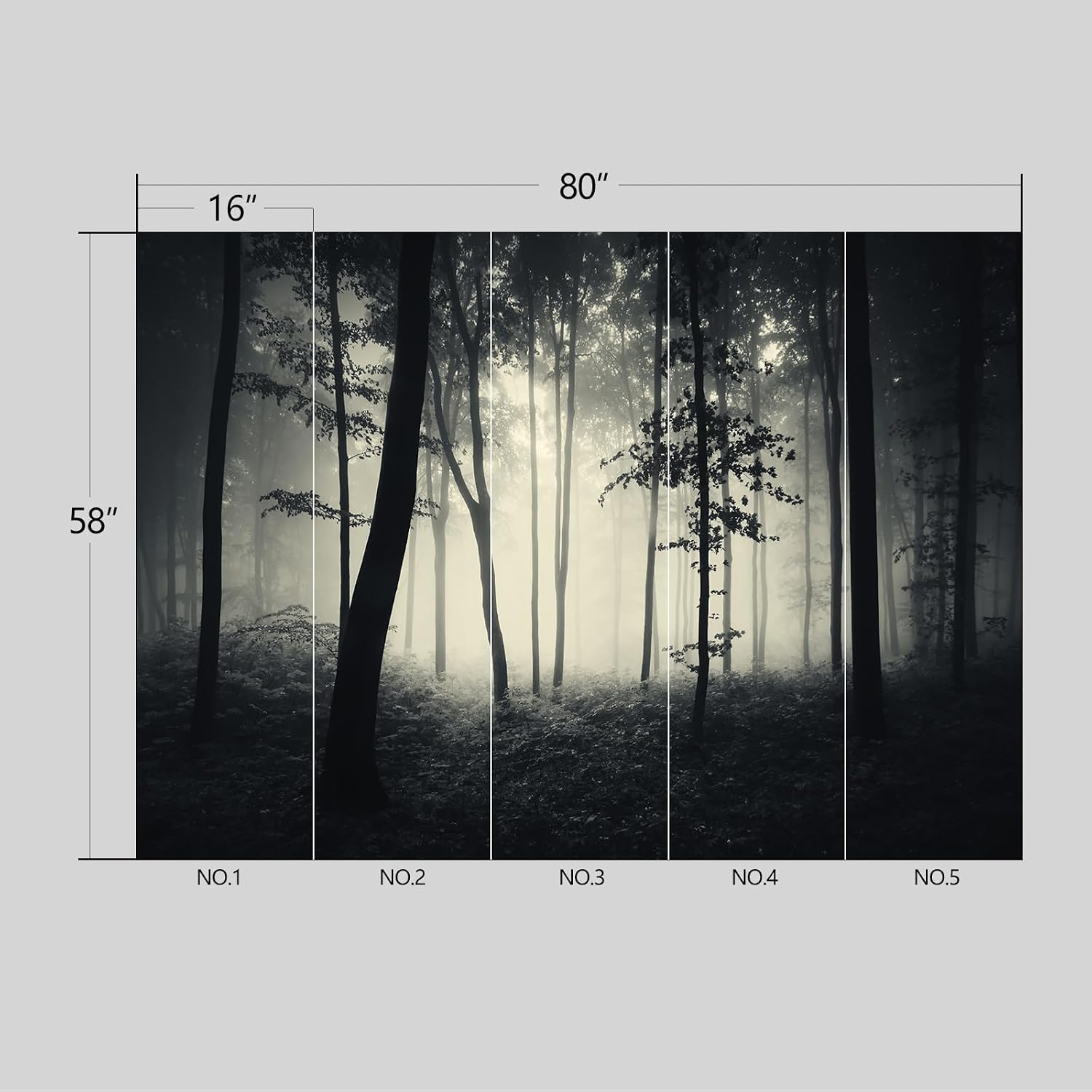
Dark
$59.99
In stock on Amazon
Check price on AmazonFor Renters or Commitment-Phobes
Peel-and-stick dark wallpaper has improved meaningfully since 2023, but let’s be honest about where it still falls short: the seams. On a light-colored paper, a slightly misaligned seam reads as a minor flaw. On a deep navy or forest green, a visible seam gap is a white line running floor to ceiling. Reviewers across multiple platforms consistently note that peel-and-stick in dark colorways requires more precise trimming and a flatter wall surface than most renters are working with.
That said, for a well-prepped, flat drywall surface — no texture, no orange peel — the newer fabric-backed peel-and-stick options perform significantly better than vinyl-backed versions. If renter-safe is your constraint, look for fabric-backed specifically.
Erfoni
$11.69
In stock on Amazon
Check price on AmazonLight Planning: The Thing Most Guides Skip
Dark wallpaper without a lighting plan is half a design decision. The paper is doing its job at night, under warm artificial light — that’s the moment it earns its keep. During the day, especially in lower-light rooms, that same wall reads as flat and heavy.
The fix is layered artificial light aimed at the wallpapered surface:
- Sconces flanking the accent wall at eye height throw light across the paper’s texture, creating depth and preventing the flat-wall effect.
- Picture lights or directional track lighting work for mural panels — treating the wall like gallery art.
- Warm-toned bulbs (2700K–3000K) are non-negotiable. Cool-white bulbs (4000K+) turn deep botanical greens gray-green and navies into cold slate. The color temperature of your lighting is doing as much work as the wallpaper itself.
Hunker’s lighting-for-dark-rooms overview makes the point well: a single overhead fixture in a room with dark walls creates a top-down shadowbox effect that feels more interrogation room than living room. The solution isn’t less dark wallpaper — it’s more light sources at more angles.
The Decision Framework
Here’s where the intermediate buyer should land, based on room conditions:
If your room has two or more windows and 9+ foot ceilings: Go full-room immersion with a mural panel or large-repeat botanical. Your natural light will carry the daytime load; the paper does the rest. Budget for professional installation — panel alignment on tall walls is where DIY errors concentrate.
If your room has one window or north-facing light: Go accent wall only, and invest aggressively in warm layered lighting before you order wallpaper. The lighting plan is load-bearing here.
If you’re renting or uncertain about commitment: Fabric-backed peel-and-stick in a deep solid or tone-on-tone texture. Accept the seam limitation and treat it as a two-year experiment before committing to paste-hung paper in your next space.
If your budget ceiling is under $600 all-in: One DIY accent wall with a mid-tier printed paper, no professional install, thorough prep. This is achievable; don’t let the premium end of the market convince you otherwise. The $90 roll from a mass retailer, properly primed and hung on a flat wall, looks better than a $400 roll hung over unprepared drywall every single time.
Dark and moody wallpaper isn’t a gamble — it’s a calculated move. Know your wall, know your light, know your real budget, and order your samples before you order your rolls. That last part isn’t a cliché; it’s the step that separates the projects that photograph beautifully from the ones that get repainted six months later.