If you’ve been renting long enough, you’ve stared at an off-white wall and felt the particular frustration of knowing exactly what you’d do with it — if only you owned it. Mural wallpaper (large-scale, image-based wallpaper that functions as a single piece of art across an entire wall) has become the most powerful statement move in residential interiors over the last few years. But the traditional version requires paste, a landlord’s written blessing, and professional installation that runs $400–$900 per room. Peel-and-stick wallpaper — panels with a repositionable pressure-sensitive adhesive backing — changes that math. You apply it yourself, move it if something shifts, and remove it at move-out without taking the paint with it.
The catch: most renter-targeted peel-and-stick products look exactly like what they are — a surface-printed vinyl sticker. Visible seams, glossy finish, patterns that scream “Etsy bedroom circa 2019.” What this guide does is cut through the product noise to show you which materials, print methods, and application approaches actually close the gap between removable wallpaper and the kind of art-forward mural that makes guests ask who your designer is.
| EDITOR'S PICK[Zeeko Vintage Forest Wall Mural](https://www.amazon.com/dp/B0DXV9XN7Z?tag=greenflower20-20)… | Mid-tier[UBEOS-Dark Floral Wallpaper Vin](https://www.amazon.com/dp/B0FK2Q5P1B?tag=greenflower20-20)… | Budget pick[Zeeko Vintage Floral Wallpaper](https://www.amazon.com/dp/B0CP79825D?tag=greenflower20-20)… | |
|---|---|---|---|
| Panel Size | 144" × 100" | 159" × 108" | 59" × 98" |
| Material | Canvas | — | — |
| Peel & Stick | ✓ | ✗ | ✓ |
| Waterproof | ✓ | — | — |
| Theme | Nature / Forest | Floral / Peony | Floral / Vintage |
| Price | $179.00 | $139.99 | $79.99 |
| See on Amazon → | See on Amazon → | See on Amazon → |
Why Most Peel-and-Stick Murals Still Look Cheap — and What Fixes It
The quality problem in this category comes down to three variables: substrate (what the wallpaper is printed on), print method, and panel registration (how cleanly the edges of adjacent panels line up to form a continuous image).
Substrate is the fastest tell. Entry-level peel-and-stick uses a thin, semi-gloss vinyl — the same basic material as contact paper. It reads shiny at any angle, shows wall texture bumps through the face, and telegraphs every air bubble. Better products use a non-woven fabric-backed substrate: a blend of polyester and cellulose fibers that lies flat, diffuses light the way painted or papered walls do, and tolerates minor repositioning without stretching. Non-woven backing is the single spec worth verifying before you order. Better Homes & Gardens’ overview of wallpaper types confirms that non-woven substrates are used across both paste-the-wall traditional products and the higher-end removable lines precisely because the dimensional stability is superior to vinyl alone.
Print method determines whether the image holds up at arm’s length. Standard inkjet printing — which is what the majority of print-on-demand mural vendors use — produces a fine result in photographs of the room. Walk up to the wall and you’ll sometimes see dot screening, color banding at gradients, or a slightly pixelated quality at transitions. Pigment ink on matte substrate is what higher-end vendors use; it produces a surface that, per Architectural Digest’s roundup of top wallpaper brands, more closely approximates the look of a traditional gouache or watercolor wash than a reproduction print.
Panel registration is the underestimated problem. A mural is printed across multiple panels, and if those panels don’t match edge-to-edge — either because of slight print variation or because your wall isn’t perfectly plumb — the image reads as a poster, not a painting. Look for vendors who ship pre-trimmed panels with a printed overlap edge, sometimes called a bleed trim, that lets you align the image before committing the adhesive. The Spruce’s installation guide specifically calls this out as the variable that separates a professional-looking install from a DIY-obvious one.
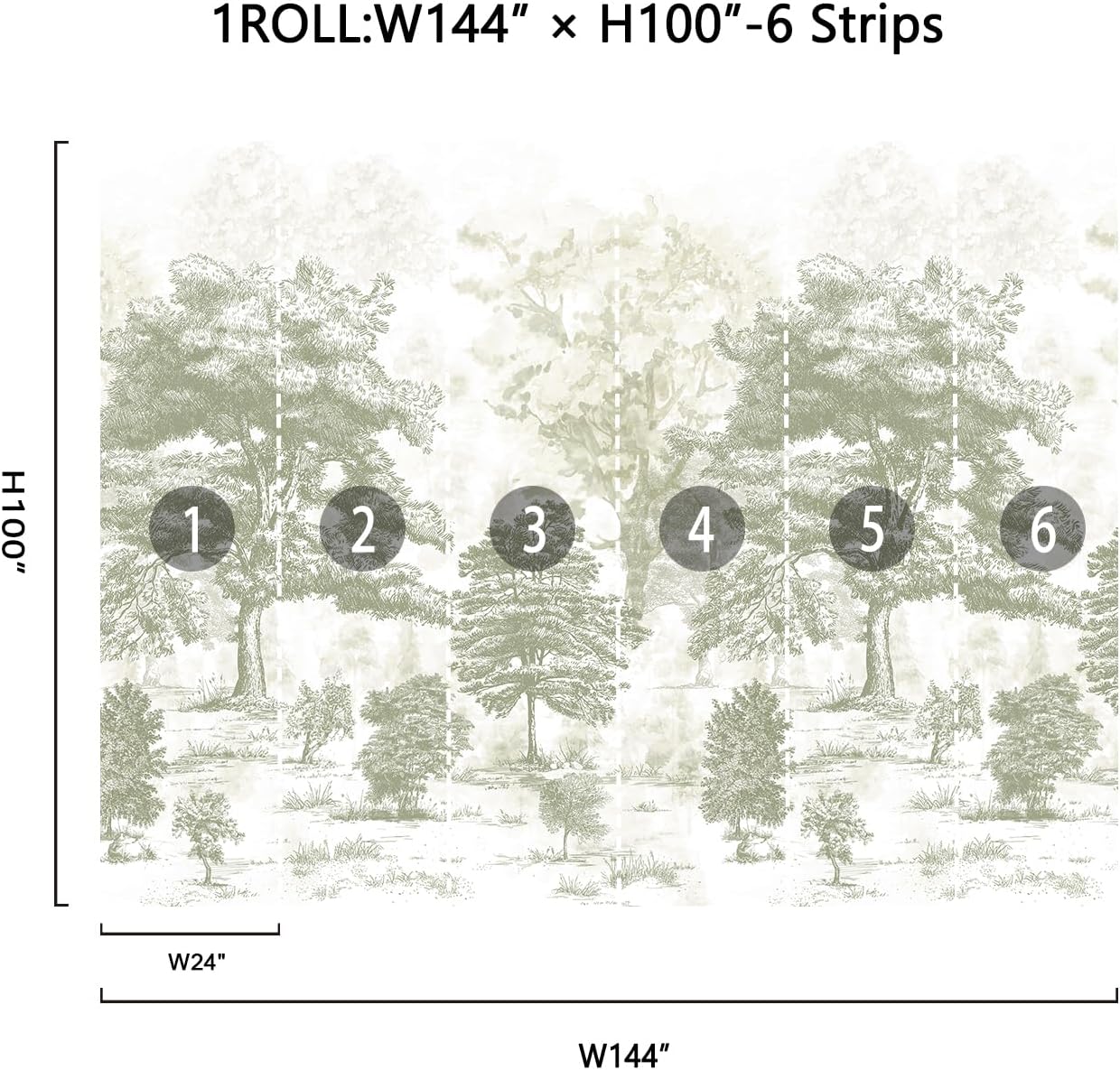
Zeeko
$179.00
In stock on Amazon
Check price on AmazonThe Budget Reality: By the Numbers
Before you commit to a specific product tier, run this math for a standard accent wall (roughly 8 ft × 10 ft = 80 sq ft):
| Tier | Typical per-sq-ft cost | 80 sq ft wall | What you’re buying |
|---|---|---|---|
| Entry vinyl peel-and-stick | $0.70–$1.10 | $56–$88 | Glossy, thin, short lifespan |
| Non-woven mid-tier | $1.50–$2.50 | $120–$200 | Matte, repositionable, 3–5 yr |
| Premium mural panels | $3.00–$5.00+ | $240–$400 | Art-quality print, thick substrate |
These figures align with pricing patterns documented across Apartment Therapy’s peel-and-stick roundup and vendor pricing visible on Wayfair and Home Depot’s wallpaper sections as of May 2026. The mid-tier range — $120 to $200 for a full accent wall — is where the quality-to-removability tradeoff actually starts making aesthetic sense for a space you want to feel designed rather than decorated.
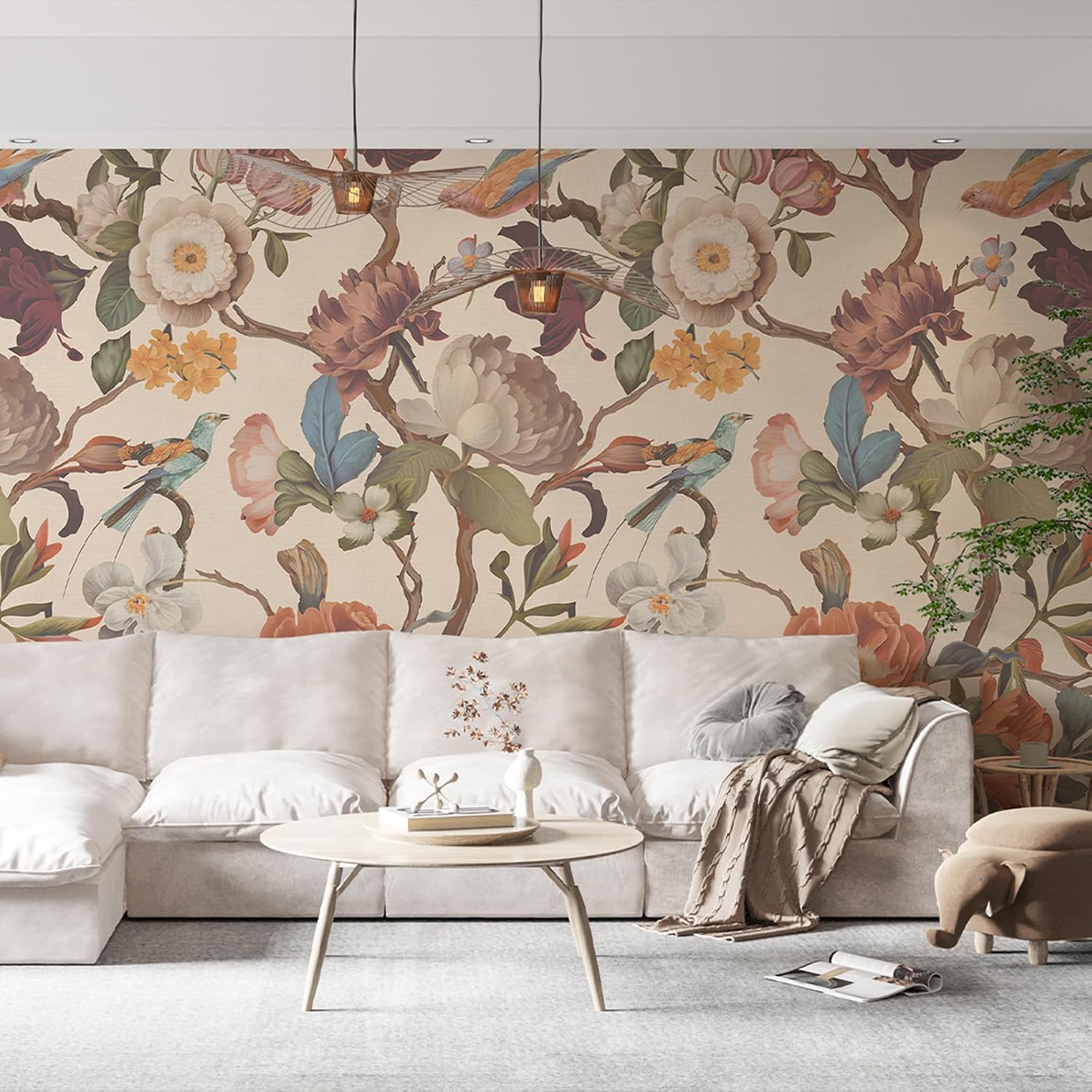
Zeeko
$79.99
In stock on Amazon
Check price on AmazonFor renters who want something that reads intentional without committing to the premium tier, the mid-tier non-woven options are the honest recommendation.
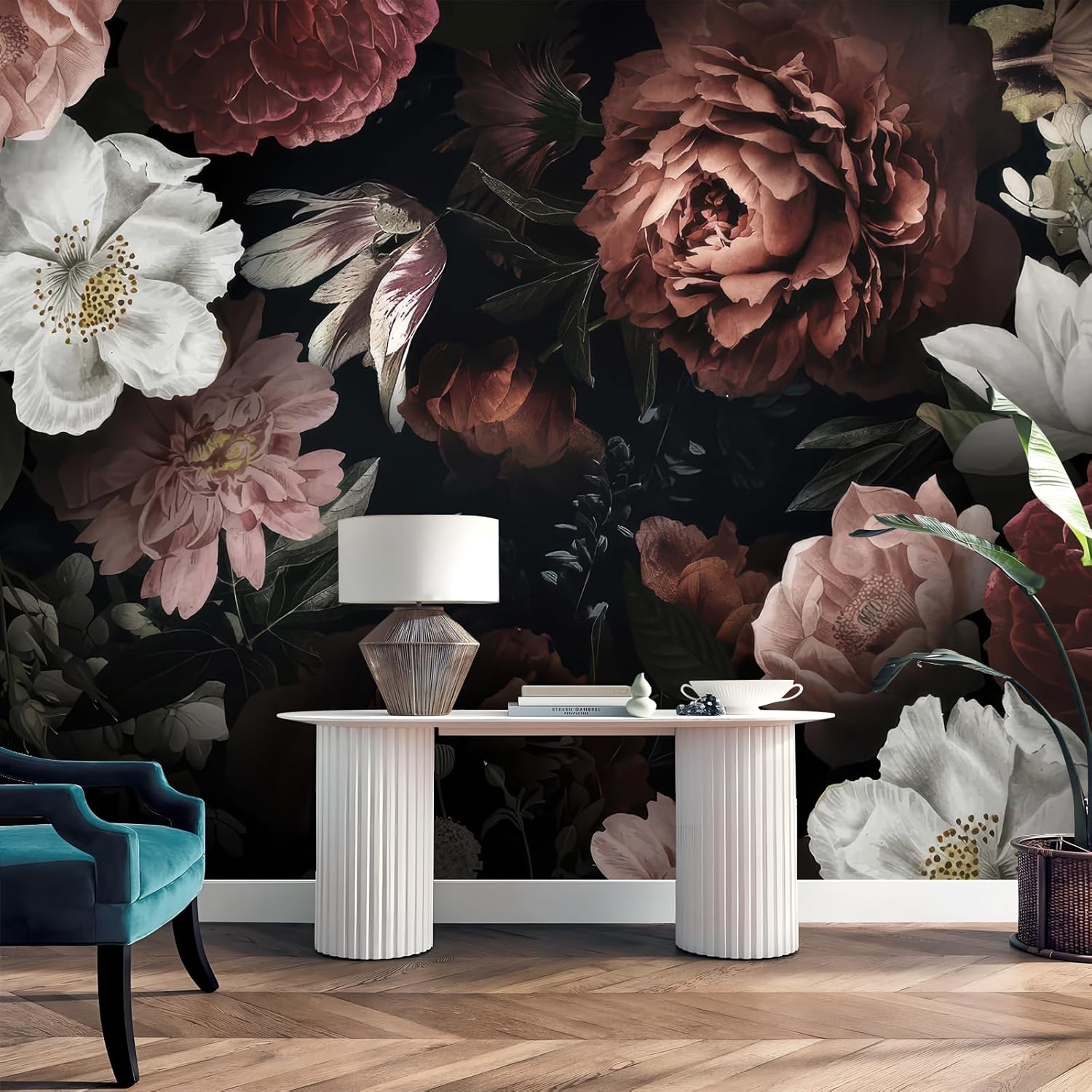
UBEOS-Dark
$139.99
In stock on Amazon
Check price on AmazonChoosing a Pattern That Reads “Art” at Full Scale
This is where most renter-buyers make the mistake that no product quality can fix: they choose a pattern that looks beautiful on a 4-inch sample square and loses all coherence at 8 × 10 feet.
Murals with hard repeat patterns — geometric tiles, symmetrical florals, small-scale botanicals — can work in smaller rooms but tend to read wallpaper-y (decorative background) rather than art-forward (focal point). If your goal is a statement wall that functions like a piece of work you’d hang in a gallery, look for:
- Landscape or atmospheric murals: distant horizons, cloudy skies, abstracted forest scenes. These hold visual interest at distance and up close without requiring perfect seam registration, because the image itself contains natural variation.
- Large-scale abstract wash patterns: the kind that evoke watercolor or plaster. Because there is no hard repeat, small seam imperfections read as intentional texture. Hunker’s buying guide notes that abstract and atmospheric patterns are consistently the most forgiving for DIY installation.
- Single-image or trompe-l’oeil murals: archways, bookshelves, garden walls. High risk, high reward — the effect is spectacular when the install is clean, but seam alignment is unforgiving. Only attempt these if your walls are plumb and you’re willing to spend the extra hour on alignment at the top edge.
A note on color at scale: Mural images that look saturated and rich on a screen frequently read washed-out when printed large and backlit by room light. Reputable vendors publish printed swatch samples — not digital swatches, not PDFs. If a vendor doesn’t offer a physical sample, that’s a red flag regardless of how compelling the product photography is. The sample-ordering habit is non-negotiable at this price point.
UBEOS-Dark
$139.99
In stock on Amazon
Check price on AmazonInstallation Variables That Determine Whether It Stays Up and Comes Off Clean
Peel-and-stick isn’t one-size-fits-all for walls. The two conditions that matter most:
Wall paint finish: Flat and eggshell paints are the enemies of clean removal. The adhesive on repositionable wallpaper can bond more aggressively to porous flat paint than to the wall itself, meaning when you pull the panel, the paint comes with it — exactly what you’re trying to avoid. The Spruce recommends applying a thin coat of wallpaper sizing (a diluted primer designed to create a smooth, sealed surface) to flat-painted walls before installation. This adds $15–$25 to your project cost but is the single most effective deposit-protection step you can take.
Wall texture: Smooth or lightly textured walls (orange peel, skip trowel at fine grade) are workable. Heavy knockdown, popcorn, or rough stucco are not — the adhesive contact surface is too uneven to hold a large panel reliably. If your rental has heavy texture on the accent wall you’re targeting, either rule out peel-and-stick or consider a fabric wall hanging system as an alternative (panels hung from a slim mounting rod anchored with removable adhesive hooks).
Removal timing: The longer peel-and-stick panels stay on a wall, the stronger the adhesive bond becomes — especially in warm or humid rooms. Most non-woven peel-and-stick products are rated for clean removal up to two years; beyond that, reviewers across aggregated forums consistently report that slow, low-angle peeling with a hair dryer on low heat is required to avoid paint pull. If you’re in a long-term rental and plan to leave the wall up for more than 18 months, mark your calendar six months before your anticipated move-out to begin careful panel assessment.
UBEOS-Dark
$139.99
In stock on Amazon
Check price on AmazonThe Decision Framework: Which Tier Is Actually Right for You
Here’s the explicit if/then:
If your wall is smooth, your lease has 12 months or more remaining, and you’re decorating a room you photograph for your own portfolio or social presence — step up to the premium non-woven mural tier. The visual difference in person is real, the installation is forgiving enough for a careful first-timer, and the per-square-foot cost is still a fraction of traditional paste wallpaper with professional install. Don’t compromise on substrate here; the mid-tier version of this product will read differently in photographs and in person.
Zeeko
$179.00
In stock on Amazon
Check price on AmazonIf your wall has eggshell or flat paint, your lease has under 12 months, or you’re treating this as a first experiment with mural scale — the mid-tier non-woven is the right call. Spend the $15 on sizing to protect yourself at move-out. Prioritize atmospheric or abstract patterns that forgive seams. Order a physical sample before committing.
If you are purely testing the concept in a rental bedroom or home office with no photography stakes — budget vinyl gets the job done for pattern exploration, but accept it for what it is. Do not expect the glossy surface to photograph as anything other than glossy.
The honest version of this category has genuinely closed the gap with traditional wallpaper — but only at the non-woven, matte-print, bleed-trimmed tier. The market for renter-grade products is large enough that vendors have real incentive to cut corners on the substrate and print process while marketing every product as “art quality.” Read the spec sheet. Order the sample. Know what finish your walls are painted in before you buy.

YQWDMX
$169.90
In stock on Amazon
Check price on AmazonThe statement wall you’ve been imagining for two years is achievable in a rental apartment in an afternoon. The gap between achievable and disappointing is almost always three things: substrate, surface prep, and a physical sample ordered before checkout.