You spent weeks finding the right wallpaper, ordered the samples, committed to the full roll count, and survived the install. Then, three weeks later, you walk past the wall and notice it: a seam — the edge where two strips of wallpaper meet — has started to peel away from the wall. That little curling edge feels catastrophic, but it almost never is. A lifting seam is simply an adhesive failure at the joint, and it’s one of the most repairable problems in home decorating. This guide will show you exactly what goes wrong, which products fix it by scenario, and when a seam problem is a symptom of something bigger that no amount of glue will solve permanently. By the end, you’ll know whether you’re a ten-minute fix or a full-panel replacement situation — and you’ll have a shopping list ready.
Why Seams Lift in the First Place
Understanding the failure mode matters here because the wrong adhesive for the wrong cause will fail again within months. There are four distinct reasons seams lift, and they respond to different fixes.
1. Inadequate priming. Bare drywall (the gypsum board that lines most modern walls) is porous. Without a dedicated wallpaper primer — a product that seals the surface so adhesive has something consistent to grip — the paste soaks unevenly into the wall and releases at the edges first. The Spruce’s guide on wallpaper seam repair specifically flags unprimed or under-primed drywall as the primary culprit in new installs that fail within weeks.
2. Paste starvation at the seam edge. Most wallpaper paste is applied to the back of the strip or to the wall, then the strip is booked (folded paste-to-paste and left to relax before hanging). If the paste dries slightly before the edge gets pressed down, or if the installer was light-handed at the margins, the seam has less adhesive than the field of the paper. Edges are always the first to fail.
3. High-humidity or temperature-swing environments. Bathrooms, kitchens, and exterior-facing walls in cold climates expand and contract. That movement stresses the seam bond repeatedly. Hunker’s overview of wallpaper peeling notes that rooms with daily humidity swings above 20 percent relative humidity should always use a moisture-resistant adhesive, not standard paste.
4. Wrong adhesive for the paper weight. A lightweight grasscloth or a heavy embossed vinyl — both require different viscosities and bond strengths. Installers who use a single all-purpose paste across every substrate will see failures at the heavy end, where the paper’s weight is literally pulling the seam open.
The Rescue Kit: What to Have on Hand Before You Need It
The good news: a well-stocked repair kit costs under $40 and handles 90 percent of seam problems. Here’s what belongs in it, organized by function.
Seam Repair Adhesive (the core product)
Standard wallpaper paste is not what you want for a repair. Repair situations call for a seam repair adhesive — a higher-tack, lower-water-content formula that grabs quickly without re-wetting the paper enough to cause bubbling. The most-referenced product category in this space is a white PVA-based (polyvinyl acetate, the same family as school glue but much more concentrated) seam adhesive, usually sold in a small squeeze bottle with a fine-tip nozzle.
Better Homes & Gardens’ hanging guide recommends applying seam adhesive with a small artist’s brush or fine-tip applicator rather than fingers, because even clean hands transfer oils that reduce adhesion. For a budget-friendly entry point that reviewers across home improvement forums consistently call reliable for standard vinyl and pre-pasted papers:
 product image](/images/external/1ae126305eaa.jpg)
Roman
$6.98
In stock on Amazon
Check price on AmazonFor thicker substrates — embossed vinyl, commercial-grade papers, or any panel over 180 gsm (grams per square meter, a measure of paper weight/thickness) — the mid-tier seam adhesives with higher solids content perform measurably better according to published product spec comparisons. Owners of heavy grasscloth installs particularly note that budget adhesives re-open within weeks on dense natural fibers:
 product image](/images/external/49a3992bfe7c.jpg)
Red
$9.68
In stock on Amazon
Check price on AmazonA Seam Roller
A seam roller is a small, hard rubber wheel on a handle, used to press the repaired edge firmly into the wall after adhesive is applied. The roller’s job is two-part: it distributes pressure evenly (a finger does not) and it forces out any micro-air pockets that would become the next failure point. The Apartment Therapy wallpaper installation guide lists the seam roller as a non-negotiable tool even for first-timers. For standard repairs, any clean roller in the 1.5–2 inch width range works:
Red
$9.68
In stock on Amazon
Check price on AmazonDamp Cloths and a Steady Hand
This sounds obvious, but the number-one repair mistake documented in aggregated installer reviews is excess adhesive squeeze-out left on the paper face. PVA adhesive dries translucent but not invisible on matte or grasscloth surfaces. Have a clean, barely-damp (not wet) cloth ready to wipe excess the moment you’ve rolled the seam. On textured or hand-painted papers especially, any residue left more than 60 seconds becomes much harder to remove without damaging the print layer.
Repair by Scenario: The Decision Tree
Not every lifting seam gets the same treatment. Here’s the decision logic:
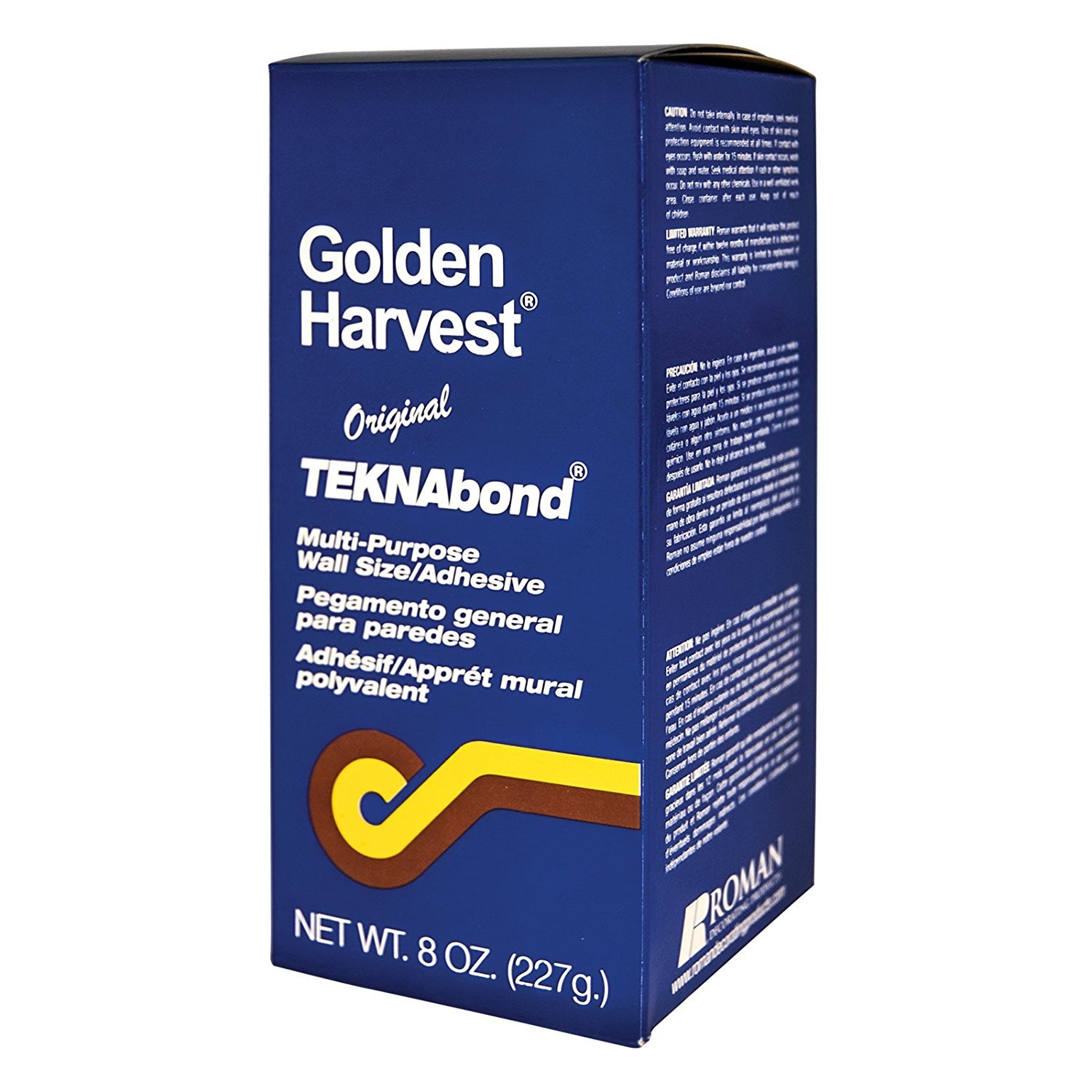
Scenario A — Single seam, less than 12 inches, paper still flexible and intact. This is the easy case. Slide the fine tip of your seam adhesive applicator under the lifted edge, apply a thin bead (less is more — you can add; you can’t take back), press with a clean finger to pre-seat, then roll firmly with your seam roller. Wipe squeeze-out immediately. Hold with painter’s tape for 30–60 minutes if the lift is pronounced. Per The Spruce’s repair walkthrough, this fix holds long-term in roughly 85 percent of straightforward cases.
Roman
$13.49
In stock on Amazon
Check price on AmazonScenario B — Multiple seams lifting in the same zone, all within two to three feet of each other. Clustered failures almost always indicate a priming problem in that zone, not random paste failures. The fix still uses seam adhesive, but you need to accept you may see re-lifting in adjacent seams over the following weeks. After repairing the immediate seams, monitor for 30 days. If you see further lifting, the permanent solution is removing those strips, repriming that section of wall with a dedicated sizing primer (a liquid applied to walls before hanging that reduces porosity), and rehanging. Architectural Digest’s wallpaper brand guide notes that most premium wallpaper manufacturers void their installation warranty specifically when walls are unprimed — this is why.
Scenario C — Paper has dried stiff and curled away from the wall. Stiff, curled edges can’t simply be re-glued flat because the paper itself has a set curl memory. You need to re-wet the back of the lifted section very lightly with a barely-damp sponge to soften the paper fibers, wait 60–90 seconds for it to relax, then apply adhesive and roll. Rushing this and gluing a still-stiff curl will create a bubble or ridge at the seam. Owners of natural-fiber papers (linen, grasscloth, sisal) consistently report this two-step softening process as essential on dried curls.
Scenario D — Seam is lifting AND you can see or feel a soft, spongy wall behind it. Stop. Do not re-glue. A soft wall surface usually means moisture intrusion or failing drywall compound (the material used to fill and smooth joints between drywall sheets). Gluing over a compromised substrate is a temporary fix at best, and at worst traps moisture that leads to mold. This is the scenario that warrants calling a professional — not because the wallpaper repair is hard, but because the underlying wall problem needs diagnosis first. Hunker’s peeling-wallpaper analysis flags this pattern specifically: persistent seam failures in a single localized area are a red flag for behind-wall moisture, not technique error.
By the Numbers
| Scenario | Repair time | Cost of materials | Expected fix longevity |
|---|---|---|---|
| Single seam, flexible paper | 10–15 min | $6–$12 | Permanent (if primed wall) |
| Clustered seams, priming issue | 30–45 min + monitoring | $15–$30 | Likely needs re-hang |
| Dried/curled edge | 20–30 min | $6–$15 | Good if softened correctly |
| Soft wall behind seam | N/A — call a pro | $150–$500+ (wall repair) | Dependent on root cause |
Upgrade Your Kit for Heavy-Duty or High-Value Papers
If you’re working with a hand-painted or bespoke panel — the kind that runs $300 or more per panel and is genuinely irreplaceable — the standard repair kit isn’t enough. The margin for error collapses when the paper can’t be reordered.
For these installs, the professional standard is a two-part approach: a fine-tip adhesive injector (essentially a syringe with a blunt-tip needle) for getting adhesive precisely under a seam without over-wetting the surrounding paper face, paired with a higher-viscosity adhesive specifically formulated for delicate or hand-finished substrates. Owners of grasscloth and artist-painted papers in long-run installer reviews consistently rate the precision-tip injection method as the single biggest quality-of-repair difference for fine papers.
Roman
$13.49
In stock on Amazon
Check price on AmazonRoman
$13.49
In stock on Amazon
Check price on AmazonFor renter-safe peel-and-stick installations — which use a pressure-sensitive adhesive layer rather than paste — seam repair works differently. Standard PVA seam adhesive is not compatible with peel-and-stick backings. For this substrate, the correct repair is a small amount of repositionable craft adhesive applied behind the lifted edge, pressed firmly, and held with a book or flat weight overnight (not a roller, which can shift peel-and-stick panels). The Apartment Therapy guide notes that peel-and-stick seam failures are often compounded by applying the panel to a freshly painted wall — paint off-gasses for 30 days and reduces adhesion during that window.
Roman
$6.98
In stock on Amazon
Check price on AmazonThe “If X, Then Y” Decision Rule
Here’s how to think about this at decision time:
- If it’s a single seam in good condition on a well-primed wall → buy the budget seam adhesive, roll it, done.
- If multiple seams are failing in a zone → fix the visible ones now, but budget time and materials for a re-hang of that section within 60 days.
- If the paper is a premium or irreplaceable panel → step up to the professional-grade injector kit; the repair cost is trivial relative to the replacement cost.
- If the wall feels soft or spongy → stop, diagnose the wall, do not re-glue until you know why the moisture is there.
- If you’re on a peel-and-stick install → skip paste-based adhesives entirely; use repositionable craft adhesive and patience.
Seam repair is genuinely one of the lower-stress wallpaper problems to solve. The mistake most people make is either ignoring a lifting seam until it becomes a peel, or overcorrecting with too much adhesive and creating a worse cosmetic problem than the original lift. Thin bead, firm roll, immediate cleanup — that sequence holds for almost every scenario in this guide. Get the right adhesive for your paper weight, and the wall you worked so hard on stays on the wall.